
Dr. Yves Saint James Aquino
Doctor and philosopher of medicine, ethicist, social scientist
Guidance documents

Pragmatic AI guidance for clinicians
I worked with the Australian Commission on Safety and Quality in Healthcare in developing resources to support the safe and responsible use of AI in healthcare.
AI Implementation in Hospitals
Legislation, Policy, Guidelines and Principles, and Evidence about Quality and Safety. The Australian Commission on Safety and Quality in Health Care engaged Macquarie University and the University of Wollongong to undertake a literature review and environmental scan to identify principles that enable the safe and responsible implementation of AI in healthcare.

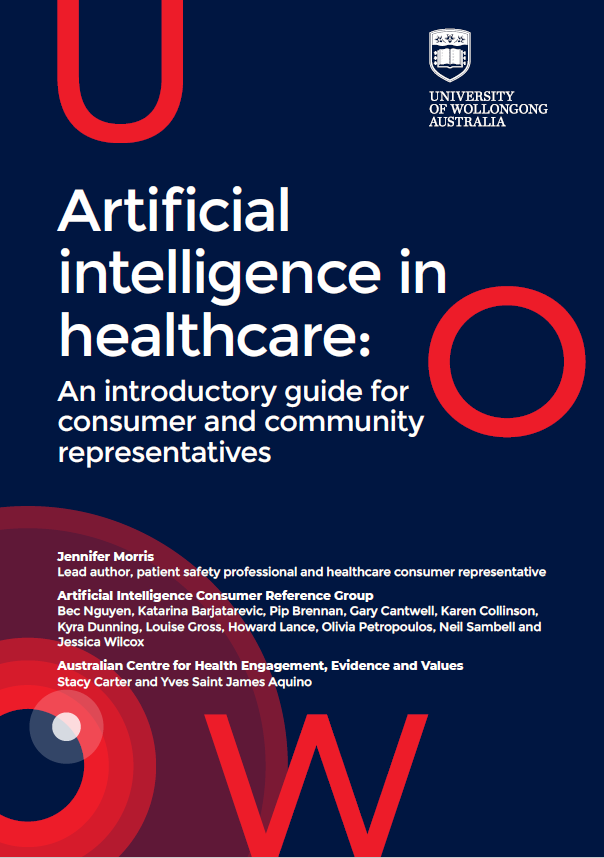
AI introductory guide for consumer and community representatives
Consumer and community representatives are increasingly involved in, and advising on, matters related to artificial intelligence (AI). This guide provides consumer and community representatives with an introduction to AI in healthcare. It covers what this technology is, how it is used, some key issues and considerations (including possible benefits and risks), and tips on how to advise and advocate effectively in this area.
Submissions to policy consultations
Safe and Responsible Artificial Intelligence in Healthcare – Legislation and Regulation Review
Along with Stacy Carter and Farah Magrabi, I submitted a response to this consultation based on our program of research that examines the ethical, social, quality and safety issues in healthcare applications of AI.
We concluded that AI implementation in healthcare requires an integrated approach to clarify how existing governance mechanisms and regulatory processes apply to healthcare applications of AI technologies. Legal and policy analyses and reform, supported by robust community and consumer engagement, are needed to address concerns about accountability and liability, consent, privacy and transparency. We are grateful for the opportunity to provide a submission to this consultation, and would be pleased to expand on any of the above if useful to the Department’s deliberations.
Regulation of health practitioners who perform and who advertise non-surgical cosmetic procedures
The submission draws the agency’s attention to three issues that need to be addressed in the guidelines
- Regulatory challenge of clarifying the distinction between cosmetic and reconstructive surgery
- Need for practitioners to have access to appropriate training in evaluation of body dysmorphia
- Need for guidance on the use of AI-generated images for advertisement
Submission to the Senate Committee on Adopting Artificial Intelligence
Our response addressing considerations from the inquiry’s terms of reference is based on our findings across our studies on the ethical, legal and social implications of the use of machine learning in healthcare.
- Recent trends and opportunities in the development and adoption of AI technologies in Australia and overseas, in particular regarding generative AI
- Risks and harms arising from the adoption of AI technologies, including bias, discrimination and error
- Emerging international approaches (vertical versus horizontal) to mitigating AI risks
- Opportunities to foster a responsible AI industry in Australia
Policy citations
Safe and Responsible Artificial Intelligence in Health Care – Legislation and Regulation Review: Final Report
Australian Government Department of Health, July 23rd 2025
This document forms the final report for the Safe and Responsible Artificial Intelligence (AI) in Health Care Legislation and Regulation Review (the review).
Cited references
- Carter, S. M., Carolan, L., Aquino, Y. S. J., Frazer, H., Rogers, W. A., Hall, J., Degeling, C., Braunack-Mayer, A., & Houssami, N. (2023). Australian women’s judgements about using artificial intelligence to read mammograms in breast cancer screening. Digital Health, 9, 20552076231191057.
- Carter, S. M., Aquino, Y. S. J., Carolan, L., Frost, E., Degeling, C., Rogers, W. A., Scott, I. A., Bell, K. J., Fabrianesi, B., & Magrabi, F. (2024). How should artificial intelligence be used in Australian health care? Recommendations from a citizens’ jury. Medical Journal of Australia, 220(8), 409-416.
AI evidence pathway for operationalising trustworthy AI in health – Publications Office of the EU

Griesinger, Claudius Benedict et al., July 14th 2025
Health, inherently rich in multi-modal data, could profit significantly from artificial intelligence (AI)1 . Yet, adoption of AI in health remains challenging due to three key issues: (1) The “trust barrier”: while a plethora of documents based on AI (ethical) principles are available, there remains a significant interpretation gap between high-level desiderata and detailed actionable concepts2 . This hampers determination of both type and level of evidence…
Cited references
- Aquino, Y. S. J. (2023). Making decisions: Bias in artificial intelligence and data‑driven diagnostic tools. Australian Journal of General Practice, 52(7), 439-452.
- Lekadir, K., Frangi, A. F., Porras, A. R., Glocker, B., Cintas, C., Langlotz, C. P., Weicken, E., Asselbergs, F. W., Prior, F., & Collins, G. S. (2025). FUTURE-AI: International consensus guideline for trustworthy and deployable artificial intelligence in healthcare. bmj, 388. https://doi.org/10.1136/bmj-2024-081554
AI from the Global Majority

Belli, Luca, Gaspar, Walter B., December 1st 2024
This volume is the 2024 outcome report of the Data and Artificial Intelligence Governance (DAIG) Coalition of the United Nations Internet Governance Forum (IGF). The Coalition is a multistakeholder group aimed at fostering critical discussions on data and AI governance…
Cited references
- Frost, E. K., Bosward, R., Aquino, Y. S. J., Braunack-Mayer, A., & Carter, S. M. (2024). Facilitating public involvement in research about healthcare AI: A scoping review of empirical methods. International Journal of Medical Informatics, 105417.
- Carter, S. M., Aquino, Y. S. J., Carolan, L., Frost, E., Degeling, C., Rogers, W. A., Scott, I. A., Bell, K. J., Fabrianesi, B., & Magrabi, F. (2024). How should artificial intelligence be used in Australian health care? Recommendations from a citizens’ jury. Medical Journal of Australia, 220(8), 409-416.
Artificial Intelligence and Healthcare in Scotland
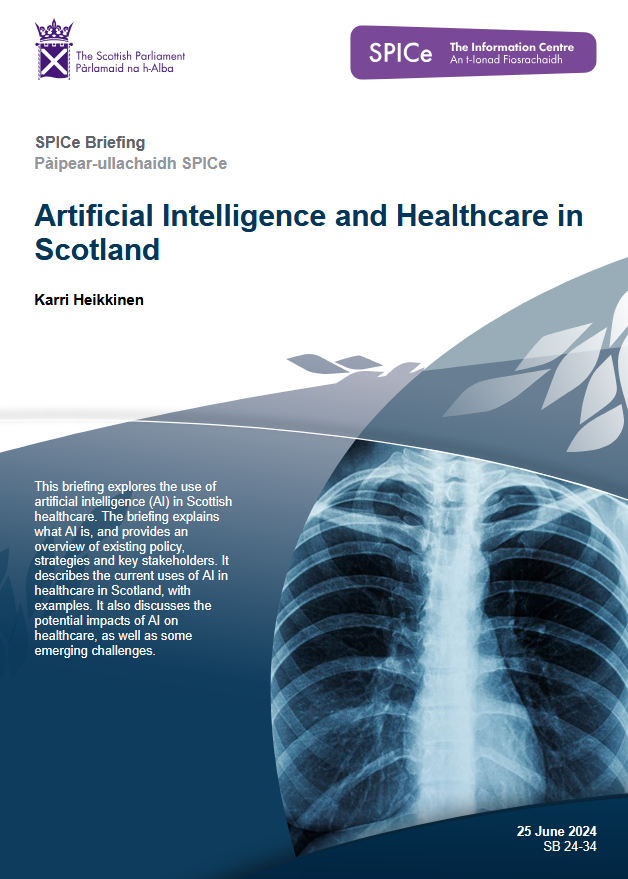
Scottish Parliament Research Briefings, June 25th 2024
This briefing explores the use of artificial intelligence (AI) in Scottish healthcare. The briefing explains what AI is, and provides an overview of existing policy, strategies and key stakeholders. It describes the current uses of AI in healthcare in Scotland, with examples. It also discusses the potential impacts of AI on healthcare, as well as some emerging challenges.
Cited references
- Aquino, Y. S. J., Carter, S. M., Houssami, N., Braunack-Mayer, A., Win, K. T., Degeling, C., Wang, L., & Rogers, W. A. (2025). Practical, epistemic and normative implications of algorithmic bias in healthcare artificial intelligence: a qualitative study of multidisciplinary expert perspectives. Journal of Medical Ethics, 51, 420-428. https://jme.bmj.com/content/51/6/420
Quality, Safety, and Disparities of AI Chatbots in Managing Chronic Diseases: Experimental Evidence

IZA Institute of Labor Economics on August 18th 2025
The rapid development of AI solutions reveals opportunities to address the underdiagnosis and poor management of chronic conditions in developing settings. Using the method of simulated patients and experimental designs, we evaluate the quality, safety, and disparity of medical consultation with ERNIE Bot in China…
Cited references
- Vo, V., Chen, G., Aquino, Y. S. J., Carter, S. M., Do, Q. N., & Woode, M. E. (2023). Multi-stakeholder preferences for the use of artificial intelligence in healthcare: A systematic review and thematic analysis. Social Science & Medicine, 338, 116357.